Choosing a browser for a MacBook Air that stays fast
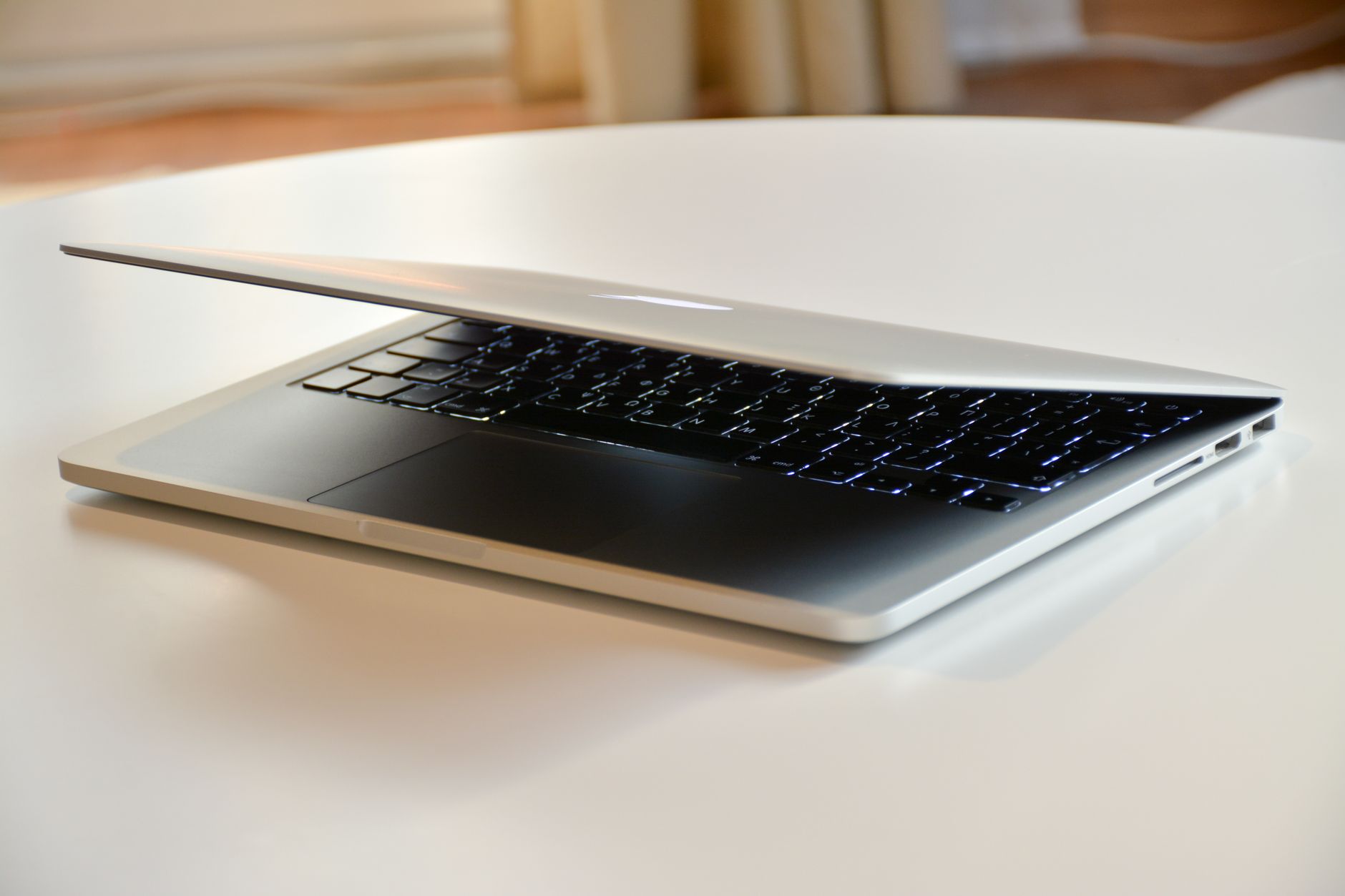
By mid afternoon the fanless aluminium is warm, the battery estimate has fallen faster than the morning suggested, and switching between a chat window and a document has picked up a small but noticeable delay. The search for the best browser for macbook air usually starts from that moment rather than from any benchmark result.
The useful framing is that a MacBook Air is not short on speed. It is a machine with a fixed thermal budget and a fixed memory ceiling, and browsers differ mainly in how much of both they hold open at once. That reframing changes which features matter.
What the specifications actually commit to
Apple's specifications page lists 16GB of unified memory as standard on the current MacBook Air, configurable to 24GB or 32GB at order time. Battery life is stated as up to 15 hours of wireless web and up to 18 hours of video streaming, with the 13 inch model carrying a 53.8 watt hour battery and the 15 inch model a 66.5 watt hour battery.
The footnote under those numbers is the part worth reading. The wireless web figure was measured by browsing 25 popular websites over Wi-Fi. That is a sequential activity: open a page, read it, move on.
A working day is not that. Slack stays connected, a calendar polls, a video call runs for forty minutes, a dashboard refreshes itself, and an AI chat holds a streaming connection open while it answers. None of that resembles visiting 25 sites in sequence, which is why real battery life lands below the published figure regardless of which browser is installed. Switching browsers does not move the workload closer to the test conditions.
The two battery capacities are worth noting separately, because the same habits produce different results on the two sizes. A 53.8 watt hour cell and a 66.5 watt hour cell running identical workloads diverge by roughly a quarter, which is a gap that browser settings can narrow but not erase. Someone who spends most of the day away from a power outlet on the smaller model has less room to absorb background work than the published figures suggest.
The thermal side follows the same logic. The Air has no fan, so sustained background work is dissipated passively and the system responds by lowering clocks. What is felt as "the browser got slow after lunch" is usually a machine protecting itself from work that has been accumulating since morning.
Tabs do not drain a battery, running processes do
The count of open tabs is a poor predictor of power use on its own. What matters is how many of them are still doing something. Chrome's own documentation describes the mechanism directly.
To extend your device's battery, Chrome reduces its image capture rate and other background tasks. When Energy Saver is on, it works automatically whenever your device is unplugged, or when your battery is low. Source: support.google.com
The same page adds three details that matter on a laptop. Energy Saver stops eligible CPU intensive background tabs. Tabs running video conferencing or playing audio are exempt from that. And the feature does not engage at all while the machine is plugged in.
Read together, this says that a reasonable amount of power management already ships in the default browser and turns itself on automatically when unplugged. So an Air that still fades in the afternoon is usually carrying work that sits in the exemption list.
The separate documentation for tab deactivation names that list explicitly: audio or video playback, screen sharing, page notifications, active downloads, partially filled forms, pinned tabs, and connected USB or Bluetooth devices. A video call window left open after the call ends matches two of those conditions at once. Closing three or four such tabs at the end of a meeting tends to do more for the afternoon than any change of browser.
Read memory pressure, not memory used
The second common misreading concerns memory. Looking at how many gigabytes of 16 are in use answers almost nothing, because macOS deliberately puts free memory to work. A high number is normal and is not evidence of a problem.
Apple's Activity Monitor user guide separates these concerns into distinct topics: viewing memory usage, and checking whether the Mac needs more RAM. The second is the question being asked, and the indicator for it is pressure rather than volume.
View memory usage. You can monitor the amount of system memory being used on your Mac in Activity Monitor. Source: support.apple.com
The procedure takes about three minutes. When the slowdown is noticeable, open Activity Monitor and look at the memory pane. If pressure is sitting in the green while the machine feels slow, memory is not the constraint and a machine with more RAM would feel the same. If pressure is elevated, the number of things held open has exceeded what this configuration supports, and layout decisions start to matter.
Doing this before shopping for a browser prevents the most common wasted fortnight, which is migrating an entire setup and arriving at the same afternoon slowdown with a different icon in the Dock.
There is a third reading in the same window that often settles the question outright. Sorting processes by energy impact rather than by memory shows whether one specific site is responsible. A single misbehaving page, a stuck upload, or an analytics dashboard refreshing every few seconds can account for most of the afternoon decline while sitting far down the memory list. When that is the case the fix is a single closed tab, and no comparison of browsers was ever relevant to it.
Four settings to try before changing anything
Four adjustments are available inside the browser already installed, and they cost nothing to test.
Turn on tab deactivation and choose a level. Chrome offers Moderate, Balanced and Maximum, which differ in how long a tab sits idle before being put to sleep.
Register exceptions first. Internal systems that lose form state on reload belong on the "always keep these sites active" list. Setting exceptions before raising the aggressiveness level avoids the side effect that usually causes people to switch the feature back off.
Show memory usage on tab hover. On Mac there is a setting that adds memory usage to the tab hover preview card. The heavy tab is frequently not the one expected. Dashboards and monitoring views that have been open since morning often outrank the document being actively edited.
Audit extensions. Extensions run regardless of tab count, and several of them run on every page load. Anything unused for several months is pure overhead on a machine with a fixed thermal budget, and removing it costs nothing to reverse later.
Run that configuration for one full day. If the afternoon is still slow, the problem is structural rather than configurational, and the next section applies.
Three kinds of candidate
Candidates sort into three groups, and comparing across groups produces the contradictory reviews that make this decision feel harder than it is.
Close to stock. Safari and Chrome. Safari's user guide lists both tab groups and profile creation, so grouping and identity separation are available without additional software or cost. On an Air this group has the least friction with the hardware.
Heavier tab tooling. Vivaldi's feature list includes tab stacking, tab hibernation, tab tiling, workspaces and user profiles. Zen's site lists workspaces, compact mode, glance and split view. Both keep the tab as the unit and make its handling more elaborate.
App aggregation. Web apps are placed as applications rather than tabs, each holding its own persistent session, so two accounts on one service become two positions rather than two logins. The model is described on Workspaces, and the list of services that come ready to place is on Supported apps.
A vertical sidebar does not separate accounts and a profile system does not make tabs easier to find, so the right group is determined by the actual complaint. Time lost searching points at the second group. Repeated re-logins point at the third.
Staying in the first group is a legitimate outcome and is underrated on this particular machine. Every additional layer of software carries its own memory footprint and its own background activity, so moving from stock to a heavier tool is only a net gain when it removes more work than it adds. For someone opening eight or nine web apps a day, tab groups plus deactivation plus a short exception list usually reaches the ceiling of what any tool could deliver. The gain from the third group appears when the number of persistent sessions is what is breaking, not when the tab count is merely untidy.
Where the free tiers stop
For the third group, the number worth checking is not the monthly price but the position of the free ceiling. These figures come from each vendor's own pricing page as published on 18 September 2026.
| Product | Free tier | Paid |
|---|---|---|
| Wavebox | 2 groups, 2 apps in each | $8.33 per month, billed annually |
| Rambox | Unlimited apps, 2 instances per app | $7.00 per month, or $70.00 per year |
| Shift | 5 Spaces, 10 apps per Space | $199.99 per year |
| Ferdium | Open source, no published ceiling | No paid tier |
On a fanless laptop one shared feature matters more than the pricing. Every product in this category ships hibernation. Ferdium's site lists putting services to sleep to prevent slowdowns, and Rambox includes hibernation in its free plan. A category where sleeping is baseline rather than premium is a category built for holding more applications than a tab strip was designed for, which is precisely the situation an Air struggles with.
Trial terms differ but cost nothing. Wavebox starts every account with a seven day Pro trial and Rambox with thirty days, both stated as requiring no credit card. The boundaries between the free and paid models are set out in Compared with Ferdium and Compared with Wavebox, with current terms on Pricing.
The shape of the daily list decides the cost more than the list length does. Eighteen apps spread across four client accounts exceeds the Wavebox free ceiling on day one, fits inside Rambox's free ceiling until a third instance of one app is needed, and fits Shift's free ceiling only if those eighteen distribute evenly across five Spaces.
What to change first
Open Activity Monitor during the next slowdown and look at memory pressure before buying or installing anything. Green pressure means the fix is closing the exempted background tabs, and that costs nothing. Elevated pressure with more than a dozen daily web apps means the layout is the constraint, and the per app session model is the thing to trial for a week. Feature details sit on Features, common pre-adoption questions on FAQ, and current terms for a browser built this way on SpaceDeck.
Frequently asked questions
Is 16GB enough on a MacBook Air for heavy browser use?
It depends on how many things stay open rather than on the number itself. Apple lists 16GB as standard with 24GB and 32GB as configure to order options. Whether it is enough is answered by memory pressure rather than by memory used, and Apple's Activity Monitor guide keeps those as two separate topics for that reason.
Does switching browsers improve battery life?
Reducing background work matters more than changing browser. Chrome already applies Energy Saver automatically when the machine is unplugged or the battery is low, and it stops eligible CPU intensive background tabs. Video conferencing and audio playback tabs are exempt, so closing call windows after meetings often produces a larger change than a migration.
Safari or Chrome on a MacBook Air?
Safari's user guide covers tab groups and profiles, and it integrates closely with the hardware. Chrome exposes three levels of tab deactivation plus a site exclusion list and a per tab memory readout, which makes diagnosis easier. If an internal business system specifies a supported browser, that requirement outranks both preferences.
What can be tested without paying anything?
Ferdium is open source with no paid tier. Wavebox offers a seven day trial and Rambox a thirty day trial, both stated as requiring no credit card. After a trial ends the free ceilings apply, which are two groups of two apps for Wavebox and unlimited apps with two instances each for Rambox, so a week of real use is enough to see which ceiling fits.